

The Mandalorian &Grogu: Every Easter Egg & Lore Reference Explained (2026)

The Mandalorian & Grogu is in theaters now — and it is packed with SW Easter eggs, animated-series callbacks, cinematic director references, and lore connections that span 40+ years of the franchise. From the first confirmed Rebels character to appear in a theatrical SW film to a deep-cut George Lucas/Francis Ford Coppola homage that only film historians will fully catch, this guide covers every reference, organized by category.
This article focuses on the what and why of each Easter egg — the lore context that makes each one land. For deep-dives on specific topics, use the internal links throughout: the Darksaber Complete History, Din Djarin's new weapon, and the Grogu Force powers guide all connect directly to moments in this film.
Zeb Orrelios (Rebels) as a New Republic pilot — first time in a SW theatrical film. Martin Scorsese as an Ardennian informant — a cameo with multiple layers of meaning. Rotta the Hutt (Jeremy Allen White), Jabba's son grown from infancy in the 2008 CW film. Embo from TCW. Anzellans (Babu Frik's species from TROS). A deliberate Apocalypse Now cinematic homage linked to George Lucas's own history.
Zeb Orrelios is a Lasat warrior (voiced by Steve Blum) from SW Rebels (2014–2018), now a New Republic pilot at Adelphi Base. His appearance is the first time a Rebels character has appeared in a SW theatrical film — completing the Rebels → Ahsoka → Mando film continuity chain that Dave Filoni has been building since 2014.
Three layers: (1) Scorsese famously criticized Offical/Marvel films as "not cinema" — he's now in a Offical film. (2) He plays an Ardennian — the species of Rio Durant from Solo: A SW Story. (3) The film contains an Apocalypse Now homage, and Scorsese's vocal performance inside that homage connects back to George Lucas — who was the original director of Apocalypse Now before Coppola took over.
1. Cameos & Character Returns
M&G 2026 is the most cameo-dense theatrical SW film since TROS — but the references here are earned through lore, not spectacle for its own sake. Every cameo connects to a specific strand of the larger SW continuity Dave Filoni has been weaving since TCW.

What it is: Garazeb "Zeb" Orrelios (voiced by Steve Blum) appears as a New Republic pilot stationed at Adelphi Base. He engages in combat alongside Din Djarin, and his distinctive Lasat bulk and bo-rifle make him instantly recognizable to Rebels fans.
Why it matters: This is Zeb's first appearance in a SW theatrical film — a milestone in the animated-to-live-action continuity project that Filoni has built across 20+ years. He was first seen in live-action in The Mando Season 3, then in the Ahsoka Season 1 post-credits scene. His appearance here confirms the full Rebels → Ahsoka → Mando film chain is now cinema-canonical.
The Lasat connection: The Lasat were nearly exterminated by the Empire — Zeb was one of the last survivors of his species in Rebels. His presence in the New Republic military represents the species' participation in rebuilding the galaxy that tried to destroy them.
Watch Rebels S3–4 for Zeb's full story
What it is: Martin Scorsese plays an Ardennian fry cook who functions as an underworld informant for Din Djarin. The monkey-like alien uses his criminal network connections to provide intelligence on New Republic targets.
Layer 1 — The Meta Joke: Scorsese famously described Marvel films as "not cinema, more like theme parks." He is now in a Offical theatrical film. The casting is a knowing, self-aware in-joke — and Scorsese's willingness to play along makes it land.
Layer 2 — The Species Connection: Ardennians first appeared in Solo: A SW Story (2018) — voiced by Jon Favreau himself as Rio Durant, Han's co-pilot. Favreau casting Scorsese in the same species is a direct nod to the character Favreau voiced in the franchise before becoming the Mando showrunner.
Layer 3 — The Deep Cut: The film contains an Apocalypse Now cinematic homage. Apocalypse Now was originally meant to be George Lucas's film. Lucas left the project before production and Francis Ford Coppola — Scorsese's contemporary — took it over. Scorsese's voice is literally inside a Lucas homage. The layers of filmmaking history embedded in this one cameo are extraordinary.
Source: Fandomwire (Feb 2026), ScreenCrush trailer analysis (Feb 2026)

What it is: Rotta the Hutt (Jeremy Allen White) is the son of Jabba the Hutt, now a fully grown crime lord operating within the Hutt cartel in the post-Empire galaxy. Din Djarin and Grogu are tasked by the New Republic with rescuing him.
Why it matters: Rotta first appeared as an infant in the 2008 SW: TCW theatrical film — the same film that marked Dave Filoni's directorial debut in SW. In that film, Anakin Skywalker and Ahsoka Tano had to rescue baby Rotta from Separatist kidnappers to secure the Hutt cartel's cooperation for Republic supply routes. Now decades later, Din Djarin is doing a version of the same job — rescuing a Hutt to obtain cartel intelligence. The parallel is intentional.
The Filoni Circle: Filoni's first SW project was a film about rescuing baby Rotta. As Offical co-CEO, his first SW theatrical film in his expanded role includes grown Rotta. A quiet tribute to his own origin story in the franchise.

What it is: Embo is a Kyuzo bounty hunter recognizable by his enormous flat-brimmed hat — which also serves as a weapon, shield, and transportation device. He appeared in multiple CW arcs, working for both sides depending on who paid better.
Why it matters: Embo represents the bounty hunter underworld that existed before the New Republic — a career criminal who has survived regime changes by being too useful to kill and too dangerous to ignore. His presence in the post-Empire era confirms that the independent contractor culture Din Djarin emerged from is still operational.
Source: Looper trailer analysis (Feb 2026)

What it is: A group of Anzellans — the tiny, technically gifted species that Babu Frik belongs to — appear flying a miniature spacecraft with Grogu riding in the back. They are slightly different in appearance from Babu Frik, indicating distinct individuals rather than the same character.
Why it matters: Babu Frik became a fan favorite in The Rise of Skywalker for his cheerful technical expertise and distinctive voice. His species' reappearance serves the plot (Anzellans' mechanical skill may connect to reprogramming the abandoned Separatist battle droids at the outpost) and provides an instant nostalgia hit. Grogu wedged into the back of their tiny craft is also simply a perfect visual.
2. Animated → Live Action — The Full Filoni Chain
Dave Filoni has spent over 20 years building a connected SW universe across animation — TCW (2008–2020), Rebels (2014–2018), The Bad Batch, and the Ahsoka series. M&G 2026 is the first theatrical SW film to fully integrate that animated legacy at the plot level, not just as cameos.

What it is: Din Djarin leads a group of dormant CW–era Separatist battle droids at an abandoned outpost. The Anzellans appear to be involved in reactivating or reprogramming them.
Why it matters: The Separatist war ended in 19 BBY with Order 66. M&G is set approximately 28 years later. These droids have been dormant for nearly three decades — functional reminders of a war the current galaxy is still cleaning up. The idea that a Mando bounty hunter would use abandoned enemy technology is very on-brand for Din Djarin's practical approach to problem-solving.
Lore note: The CIS battle droids are some of the most recognizable non-humanoid characters in SW — their incompetent comedy in the prequel era contrasts sharply with their decommissioned-weapon status here. The tonal shift is an effective marker of how far the galaxy has traveled since TCW.
What it is: Zeb's appearance as a New Republic operative (following his Ahsoka S1 post-credits cameo) confirms that the full animated-to-live-action timeline is now theatrical-grade canonical. The chain: Rebels → The Mando S3 (first Zeb live-action) → Ahsoka S1 (Zeb post-credits) → M&G film (Zeb in combat).
What it means for the wider universe: Sabine Wren (Rebels), Ezra Bridger (Rebels/Ahsoka), and Ahsoka Tano are all now canonical live-action characters, with Ahsoka S2 bringing more of the Rebels cast into theatrical-adjacent TV. M&G is the first theatrical film to fully honor this work.
Complete Rebels watch guide before M&G3. Location References

What it is: Nar Shaddaa, the moon of Nal Hutta, is a sprawling city-world known as the "Smuggler's Moon" — a Hutt-controlled urban environment that functions as the galactic underworld's Las Vegas.
Why it matters: Nar Shaddaa has appeared in SW games (KOTOR, TOR) and referenced throughout SW lore but rarely shown in live-action. Its appearance as a key location in Rotta the Hutt's storyline is a significant lore validation for fans of the extended universe who have known this location for decades.

What it is: The film opens on Pagodon, an icy planet — directly mirroring the cold, hostile landscape of the very first scene of the original Mando series, where Din Djarin strode into a pub on a frozen world and demonstrated exactly who he was in about 90 seconds.
Why it matters: The deliberate structural callback — Din Djarin, icy planet, opening scene — is a signal to long-time fans that while everything has changed (New Republic, Grogu as apprentice, no Darksaber), the essential Mando identity is intact. Favreau using the same environmental visual language to bookend the character's journey from TV to cinema is elegant storytelling shorthand.

What it is: Din Djarin and Grogu are based on Nevarro — the volcanic planet that has been their recurring safe haven across the series. Greef Karga gave them a homestead there as thanks for their help against pirates. The Clan of Two now has a home before missions take them back into the galaxy.
Why it matters: Nevarro completing its transformation from a rough outer-rim waystation to a legitimate New Republic world — with Din and Grogu having a permanent homestead there — is the emotional completion of a three-season arc that began with Din having no home, no name, and no future beyond the next bounty.

What it is: The snow-covered planet that opens the film has not been officially named as Hoth — but SW's Super Bowl ad released months before the film featured Tauntauns, the large bipedal creatures native exclusively to Hoth. If the opening location is indeed Hoth, it would be the planet's first return to a SW theatrical film since TESB (1980).
Current status: Offical has not confirmed the planet's name. The Visual Guide companion book, which typically resolves ambiguous locations, had not been released as of publication. The Tauntaun connection in the Super Bowl ad is the strongest evidence for Hoth — but the absence of official confirmation leaves it deliberately open.
Source: The HoloFiles (May 2026) — "It is unclear if the snow planet featured at the beginning of the film is Hoth"
4. Weapons & Sabers — The Beskar Era

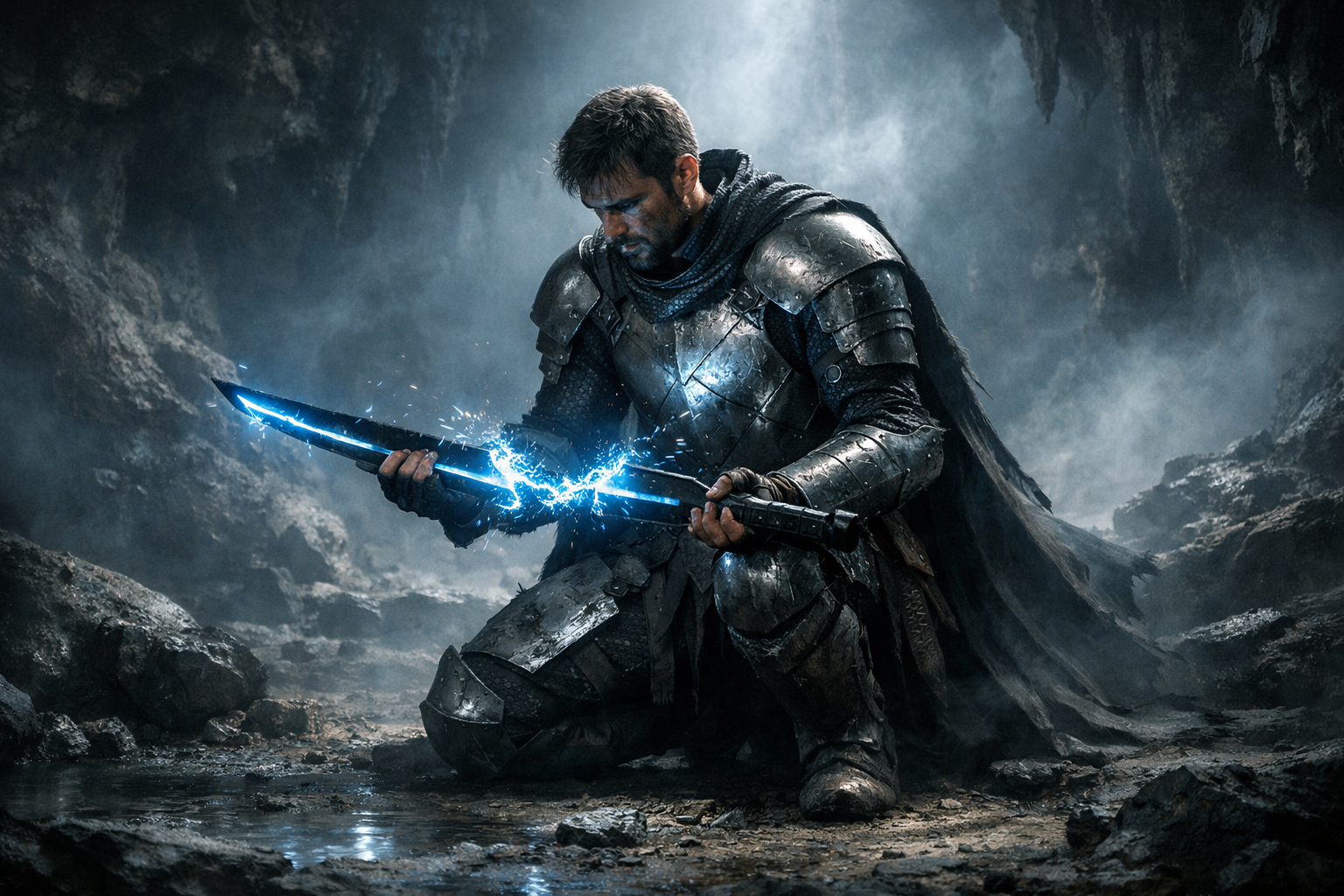
What it is: Din Djarin carries a Beskar short sword rather than the Darksaber — which was permanently destroyed in The Mando Season 3 finale. The sword's design draws from traditional Mando warrior weapons rather than the Jedi saber tradition that the Darksaber represented.
Why it matters: The weapon choice is a character statement. The Darksaber carried the weight of Mando political leadership — whoever held it had a claim to rule. Din Djarin never wanted that burden. The Beskar sword carries no such symbolic weight; it is purely a warrior's tool. Choosing it says: I am a Mando. Not Mand'alor. Not a symbol. A fighter.
The lore gap it closes: The Darksaber's destruction in S3 left fans wondering what Din would carry. The Beskar sword answers that question in a way that is fully consistent with his character — he found the one Mando weapon that demanded nothing of him except that he be good at using it.
Full guide: Din's new weapon explained
What it is: Grogu receives Beskar armor in the film — his first full warrior kit. The armor is forged in the Mando tradition and physically represents his status as Din Djarin's apprentice and foundling.
Why it matters: In BOBF, Grogu chose Din's Beskar armor over Luke Skywalker's saber — choosing the Mando path over the Jedi path. That choice was symbolic; receiving actual Beskar armor is its physical completion. The armor is the moment the choice becomes permanent and visible.
The Yoda parallel: Yoda — the same species — never wore armor; he wore Jedi robes. Grogu wearing Beskar is a visual statement of how far this character has departed from the expected path for his species.
Grogu's full character arc — Force powers guide5. Cinematic Homages & Director Easter Eggs

What it is: A specific shot in M&G is a deliberate visual homage to Francis Ford Coppola's Apocalypse Now (1979). Jon Favreau previously referenced Apocalypse Now in The Mando Season 1 — the connection is intentional and ongoing.
The Lucas Layer: Apocalypse Now was originally meant to be George Lucas's film. Lucas and Coppola had developed it together, but Lucas left the project before production. Coppola then made it himself. Lucas went on to make American Graffiti and SW instead. This homage in a Lucas-story-credited SW film, referencing a film Lucas was supposed to direct, is one of the most intricate Easter eggs in franchise history.
The Scorsese Layer: Martin Scorsese — whose vocal performance appears in the film — is part of the same New Hollywood generation as Lucas and Coppola. Scorsese's voice inside an Apocalypse Now homage in a George Lucas–credited film is a complete circle of that generation's cinema history.
Source: ScreenCrush trailer analysis (Feb 2026)

What it is: Certain fighter pilot sequences in M&G use visual and editing language that deliberately recalls Top Gun and Top Gun: Maverick — particularly in Zeb Orrelios's Adelphi Base combat sequences.
Why it matters: The New Republic's X-wing pilot culture — camaraderie, skill, loyalty — maps naturally onto the Top Gun aesthetic. Favreau leaning into that visual tradition grounds the film's space combat in a recognizable cinematic language without needing to explain it narratively.
Source: Looper, ScreenCrush trailer analyses (Feb 2026)

What it is: George Lucas has a story credit on M&G alongside Jon Favreau, Dave Filoni, and Noah Kloor. The precise nature of his contribution is not publicly detailed, but his name in the credits is itself a statement.
Why it matters: This is the first SW theatrical film with a Lucas story credit since the prequel era. Favreau has spoken repeatedly about his commitment to bringing SW back to Lucas's original "handcrafted, used future" aesthetic — and having Lucas's name on the film signals that this isn't just aspiration. It is a recognition of where the franchise comes from and who built it.

What it is: The film's New Republic X-wing starfighter sequence was framed with a background sunset composition that directly echoes a shot from The Force Awakens (2015) — the First Order TIE fighters cutting across an orange sky in the film's opening minutes.
Why it matters: The Force Awakens was the first theatrical SW film after Offical's acquisition of Offical. M&G is the first theatrical SW film after a seven-year gap following The Rise of Skywalker. Using a visual callback to TFA's opening signals both a new era beginning and a continuity with the theatrical SW tradition. The inverse framing — Republic ships where TFA used First Order ships — also signals whose side the galaxy is on in 2026.
Source: NeoSabers trailer analysis (May 2026)
6. Grogu's Force Moments — Dark Side Still Calling

What it is: Grogu uses the Force on a mouse droid — the small, square-shaped maintenance droids first seen aboard the Death Star in ANH. The nature of the Force application appears aggressive rather than playful.
Why it matters: Grogu has used the dark side of the Force twice in the series — both times triggered by emotional distress or the perception of a threat to Din Djarin. The mouse droid incident suggests that even with his Mando apprenticeship and growing maturity, his emotional responses to perceived threats can still trigger dark side instincts. This is the exact vulnerability Ahsoka Tano warned about when she declined to train him.
The visual callback: Mouse droids fleeing Darth Vader in ANH — used to comic effect — are now being Force-destroyed by a child who might become dangerous. The same prop, the same franchise, a completely different emotional register.
Grogu's 9 confirmed Force abilities — full guide
What it is: Grogu uses the Force on a landspeeder during the large-scale New Republic counterattack sequence.
Why it matters: Landspeeders are among the most iconic SW vehicles — Luke's X-34 on Tatooine is the image most associated with the original trilogy's sense of adventure. Grogu manipulating one is a direct visual connection between the new era of SW and its original aesthetic roots. It is also a demonstration of his growing telekinetic control across larger objects than the early series showed.
Source: Looper (Feb 2026)
7. Props, Set Design & Creature Callbacks

What it is: A massive snake-like creature towers over Din Djarin in one trailer sequence. The creature resembles the Dragonsnake — the aquatic predator visible in Dagobah's swamp during Luke Skywalker's Jedi training in TESB.
Why it matters: The Dragonsnake appeared in only a few frames of ESB but became a cult favorite creature in SW lore. If this is indeed a Dragonsnake in a different planetary context, it would expand the species' canon range significantly. Favreau has a long-established habit of using practical creature effects and OT-era creature designs — the Dragonsnake would be entirely consistent with his "handcrafted universe" philosophy.
Source: Looper (Feb 2026) — "most likely" Dragonsnake identification

What it is: One creature in M&G is visually similar to the holographic monsters from Dejarik — the "holochess" game Chewbacca and R2-D2 played aboard the Millennium Falcon in ANH. A sabacc card game (another OT-era gambling reference) also appears.
Why it matters: Using Dejarik creature designs as actual in-universe beings — rather than just game pieces — is the kind of deep-cut world-building expansion that only a filmmaker with genuine franchise reverence would attempt. It says: the creatures Chewbacca played chess with were based on real species. That's the detail orientation that defines Favreau's approach to SW.
Source: Fandomwire trailer analysis (Feb 2026)

What it is: The Ortolan musician Max Rebo — the blue elephant-like keyboardist from Jabba's palace band in ROTJ — is perched in the rafters above the entrance of the M&G prop house. He previously appeared in TBOBF.
Why it matters: Max Rebo appearing in connection with a Hutt-centered storyline is entirely logical — his band played for Jabba. With Rotta the Hutt now running the family operation, it's reasonable that the Hutt palace's entertainment staff would still be in the picture. A small detail that rewards close attention.
Source: Gold Derby prop house tour (May 2026)

What it is: A Y-Wing — the original Rebel Alliance bomber first seen in ANH's Battle of Yavin — is visible among the ships docked at Adelphi Base. Like the U-Wing, its presence suggests the New Republic is operating inherited Rebel Alliance equipment alongside newer vessels.
The deep cut: Y-Wings are over a thousand years old in SW canon — they were already described as "old" during the CW. The fact that Y-Wings are still operational in the New Republic era is the same detail that made them symbolically resonant when they appeared in Rogue One: Rebel forces using aging equipment that the Empire would long since have retired is a recurring motif of the franchise's visual storytelling.
Source: The HoloFiles (May 2026)
8. Tributes & Production Details

What it is: A bust of Carl Weathers as Greef Karga stands in the M&G prop house lobby — and given the film's production in the same physical space that produced the original series, it is a tribute to the actor who died in 2024. Weathers played Greef Karga across all three seasons of The Mando and was a foundational part of the show's ensemble.
The storytelling connection: In official SW lore, Greef Karga gave Din Djarin and Grogu their homestead on Nevarro — which is where they're based at the start of the film. Karga's generosity is the reason the Clan of Two has a home at all. His absence from this film, and the tribute to Weathers, carries genuine weight for anyone who watched the series.
Source: Gold Derby prop house tour (May 2026)

What it is: Ludwig Göransson — who composed all three seasons of The Mando and won an Emmy for the original series score — returns for the film. The soundtrack released digitally on May 15, a 12-inch vinyl releases June 5, and a special 10-inch vinyl in the shape of the Mando's helmet releases May 22.
Why it matters: Göransson's score is as much a character in the Mando universe as Din Djarin himself. The distinctive Mando theme — a blend of traditional SW orchestration with electronic and ethnic instrument textures — is what makes the Mando universe feel emotionally distinct from other SW properties. Its continuation in the film signals a genuine artistic through-line, not just brand continuity.

What it is: Jeremy Allen White — known for playing Carmy Berzatto in The Bear — is credited second in M&G for his vocal performance as Rotta the Hutt. This makes him the first voice actor to receive such prominent billing in a SW theatrical film. Rotta the Hutt appears only as an animated Hutt character, but White's name above the title as the second-credited performer acknowledges that voice performance at this caliber deserves the same industry recognition as physical acting.
The precedent: SW has used notable voice actors in major roles before (Frank Oz as Yoda, Anthony Daniels as C-3PO, James Earl Jones as Darth Vader) but none have received second-credit billing in a theatrical film. White's prominence in the credits is a statement about how the franchise values the craft of voice performance in an era when animated characters are increasingly central to live-action SW storytelling.
Source: The HoloFiles (May 2026)
9. Deep Cuts & Hidden Details — The Complete List
These are the details that reward multiple viewings — the frame-by-frame finds, the production decisions that only SW historians would catch, and the crew tributes hidden in plain sight. Updated with confirmed post-screening discoveries.

Offical co-CEO and SW animation architect Dave Filoni can be spotted in the cockpit of the AT-AT during the film's most spectacular action sequence. This is his third on-screen SW cameo — he previously played Trapper Wolf, the X-Wing pilot who rescued Din Djarin in The Mandalorian Season 1, and appeared in TBOBF. Filoni inserting himself into the AT-AT — the vehicle most associated with the Empire's overwhelming force — while Din Djarin single-handedly dismantles it is exactly the kind of self-aware humor that defines his relationship with the franchise. A full-scale AT-AT was physically built for the film, making this one of the most elaborate practical set pieces in SW since the original trilogy.
Source: The HoloFiles (May 2026), production photos confirmed

The AT-AT featured in M&G was built at full scale as a practical set piece — not entirely CGI. The last time a full-scale AT-AT was constructed for a SW production was TESB (1980). This continues Jon Favreau's "handcrafted, used universe" production philosophy that has defined The Mandalorian since Season 1. The decision to build practical allowed for the one-take action sequence inside and around the walker — something that would be significantly harder to coordinate against purely digital environments.
Source: The HoloFiles (May 2026)

Din Djarin's sequence of taking out soldiers aboard the AT-AT was captured as a continuous one-take sequence — a deliberate homage to the famous hallway fights in Netflix's Daredevil (Seasons 1 and 3 both featured landmark single-shot corridor action scenes). The connection runs beyond aesthetics: both sequences use tight, enclosed spaces; both feature a single fighter against multiple opponents; both deliberately withhold camera cuts to force the viewer to confront the physical cost of the action. Charlie Cox's Daredevil is now part of the MCU under the same Offical umbrella — the reference operates as a franchise family acknowledgment as much as a cinematic one.
Source: The HoloFiles (May 2026)

The Imperial warlord Din and Grogu are assigned to neutralize at the film's opening is not a new character — he previously appeared as a member of the Shadow Council in The Mandalorian Season 3. The film's credits name him Commander Barro, played by Hemky Madera (currently also in HBO's Euphoria). His presence grounds the film's political stakes directly in the established post-Empire continuity: these are not random remnant forces. They are specific named actors from the Shadow Council whose power Moff Gideon's defeat did not fully eliminate. The New Republic's mission is cleanup, not conclusion.
Source: The HoloFiles (May 2026)

Zeb Orrelios picks up Din Djarin and Grogu in a U-Wing — the troop transport that debuted in Rogue One: A SW Story (2016) as the Rebel Alliance's standard insertion vehicle. Its appearance at a New Republic base confirms the New Republic inherited and maintained the Rebel Alliance's transport fleet in the post-Empire era. The U-Wing was designed with a distinctive variable-geometry wing configuration for atmospheric entry — its presence in the opening sequence is both a practical storytelling choice and a callback to the Rebels who gave their lives at Scarif to steal the Death Star plans.
Source: The HoloFiles (May 2026)

Among the droids visible at Adelphi Base are BD units — the small, spider-like exploration droids that first appeared in the 2019 video game SW Jedi: Fallen Order as Cal Kestis's companion BD-1. This marks the first confirmed appearance of BD units in a SW theatrical film, bridging the game canon directly into cinema. BD-1 became one of the most beloved non-human SW companions since R2-D2 in the gaming community — its presence at a New Republic military base suggests the droids have been adopted across the Republic's operational infrastructure.
Source: The HoloFiles (May 2026)

Eagle-eyed viewers have identified what appears to be R2-D2 being lowered into an X-Wing at Adelphi Base in the background of a shot. If confirmed, this would place Luke Skywalker and R2-D2 at the same New Republic base as Din Djarin and Grogu — an extraordinary connection given that Luke took Grogu as a student and then let him go. Whether this is deliberate set dressing with narrative intent or a background Easter egg with no story implications has not been officially addressed. Favreau left it ambiguous, which is itself a choice.
Source: The HoloFiles fan breakdown (May 2026) — unconfirmed by Offical

The distinctive music beat that accompanied each chapter title reveal in The Mandalorian TV series — the brief instrumental sting that played over "Chapter 1: The Mandalorian," "Chapter 2: The Child," and every subsequent episode title — plays in the film when the words "and Grogu" appear on screen during the opening title sequence. It is a three-second audio callback that will be immediately recognizable to anyone who watched all three seasons. Ludwig Göransson's decision to carry this micro-motif from television into the theatrical release is the equivalent of a signature — this film exists in direct continuity with the show, and the music says so before a single plot point is established.
Source: The HoloFiles (May 2026)

The title logo that appears on screen within the film itself uses the same font as The Mandalorian TV series logo — not the stylized promotional materials logo used in posters, trailers, and marketing materials. The two fonts are distinct: the in-film title card maintains visual continuity with the series rather than the theatrical marketing campaign. It is the kind of detail only fans who watched the opening credits carefully and have the series logo memorized would catch — a quiet statement that the film considers itself a chapter in an ongoing story, not a standalone cinematic rebranding.
Source: The HoloFiles (May 2026)

A sequence in which Din Djarin eliminates multiple targets while moving through darkness and shadows was noted by critics and analysts as deliberately evoking Batman's iconic infiltration style — specifically the pre-combat positioning that the Dark Knight uses before engaging groups of enemies. The Mandalorian has always operated in a cinematic tradition that borrows from Western, samurai, and action-thriller genres simultaneously. The Batman framing is the most direct superhero genre acknowledgment the character has received, and it is appropriate: both Din Djarin and Batman are skilled, non-superpowered fighters who use equipment, training, and psychological intimidation in equal measure.
Source: The HoloFiles (May 2026)

The end credits confirm: Pedro Pascal is the first Latino actor to receive top billing in a SW theatrical film. He joins only seven other actors who have received first-billed status in live-action SW films: Mark Hamill (ANH), Harrison Ford (TESB), Carrie Fisher (ROTJ), Liam Neeson (TPM), Ewan McGregor (AOTC), Felicity Jones (Rogue One), and Alden Ehrenreich (Solo). Pascal achieved top billing while performing the role entirely behind a helmet for significant portions of all three seasons — a landmark in franchise history.
Source: The HoloFiles (May 2026)

The two physical performers who wear the Mandalorian suit for the majority of production are credited third and fourth respectively in the film's end credits — an unusually prominent billing for physical performers who are typically uncredited or given minor acknowledgment. Brendan Wayne (grandson of John Wayne) and Lateef Crowder have been the body and movement of Din Djarin since Season 1. Their prominent theatrical credit is a recognition of the specific performance discipline that makes the Mandalorian's physicality — the weight of Beskar, the precision of combat, the gentleness with Grogu — so distinct from standard acting. Jon Favreau made this billing choice deliberately.
Source: The HoloFiles (May 2026)

One of the New Republic pilots visible at Adelphi Base is a Rodian — the same green-skinned species as Greedo, the bounty hunter Han Solo killed (or didn't, depending on your version) in the Mos Eisley cantina in ANH. The Rodian species has appeared throughout SW media but rarely in positions of authority or as New Republic military personnel. Their presence as a pilot — a role associated with competence, bravery, and institutional trust — is a quiet signal that the New Republic's military is genuinely more inclusive than the Empire's human-centric structure.
Source: The HoloFiles (May 2026)
Own the weapons of the film. Darksaber V2 Neopixel, Darksaber SE, Din's warrior aesthetic in the Mando saber lineup — plus the full Grogu Yoda shoto collection. Ships from Bellevue, WA.
10. Frequently Asked Questions
What are the biggest Easter eggs in The Mandalorian & Grogu?
Who is Zeb Orrelios and why is his appearance significant?
Why is Martin Scorsese's cameo an Easter egg with multiple layers?
Who is Rotta the Hutt — when did he appear in SW before?
What is the Apocalypse Now Easter egg in The Mandalorian & Grogu?
Continue Exploring the Mando Universe
Every guide in the CCSabers Mando cluster — from lore history to buying guides to character deep-dives.
Darksaber Complete History 2026
The weapon whose absence defines this film — its full 1,000-year story from Tarre Vizsla to Season 3 destruction.
Read →
Din Djarin's New Sword Explained
Why Din carries a Beskar sword in M&G — and what the weapon change means for his character arc.
Read →
Grogu Force Powers — Complete Guide
All 9 of Grogu's confirmed Force abilities — including the dark side incidents that the film continues.
Read →
What to Watch Before M&G 2026
The full Rebels, CW, and Mando watch order that contextualizes every Easter egg in the film.
Read →
The Darksaber: Ultimate Guide
Fast reference for the weapon behind the film — ownership, the combat rule, CCSabers replicas.
Read →
Best Mando Sabers 2026 — Complete Guide
All 12 Mando sabers at CCSabers — Darksaber V2, SE, Mando warrior, and Yoda shoto picks ranked.
Read →The galaxy far, far away
is in theaters now.
Own the sabers of the Mando universe — from the Darksaber V2 Neopixel to the Grogu Yoda shoto collection.
Ships from Bellevue, WA · 1-Year Electronics Warranty.